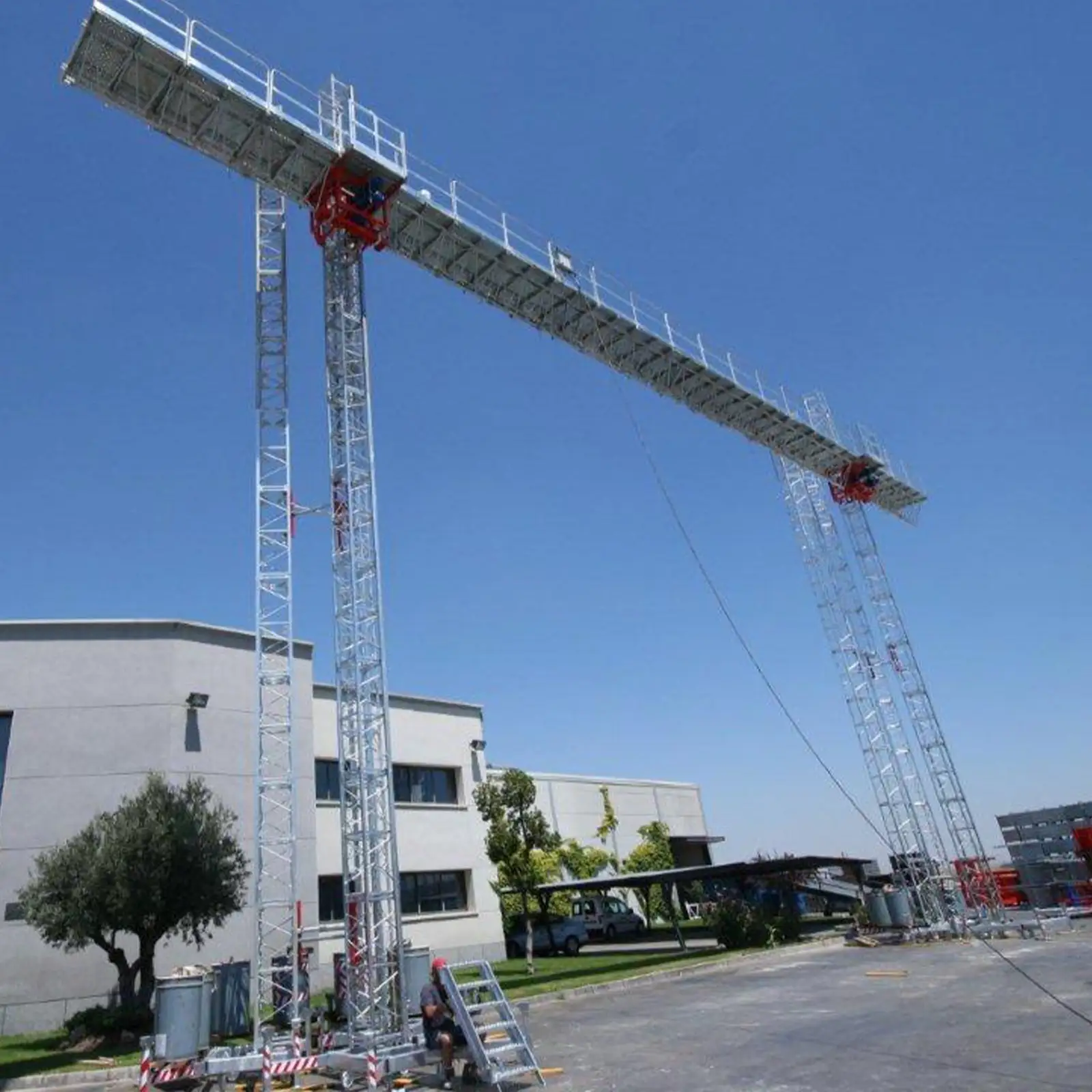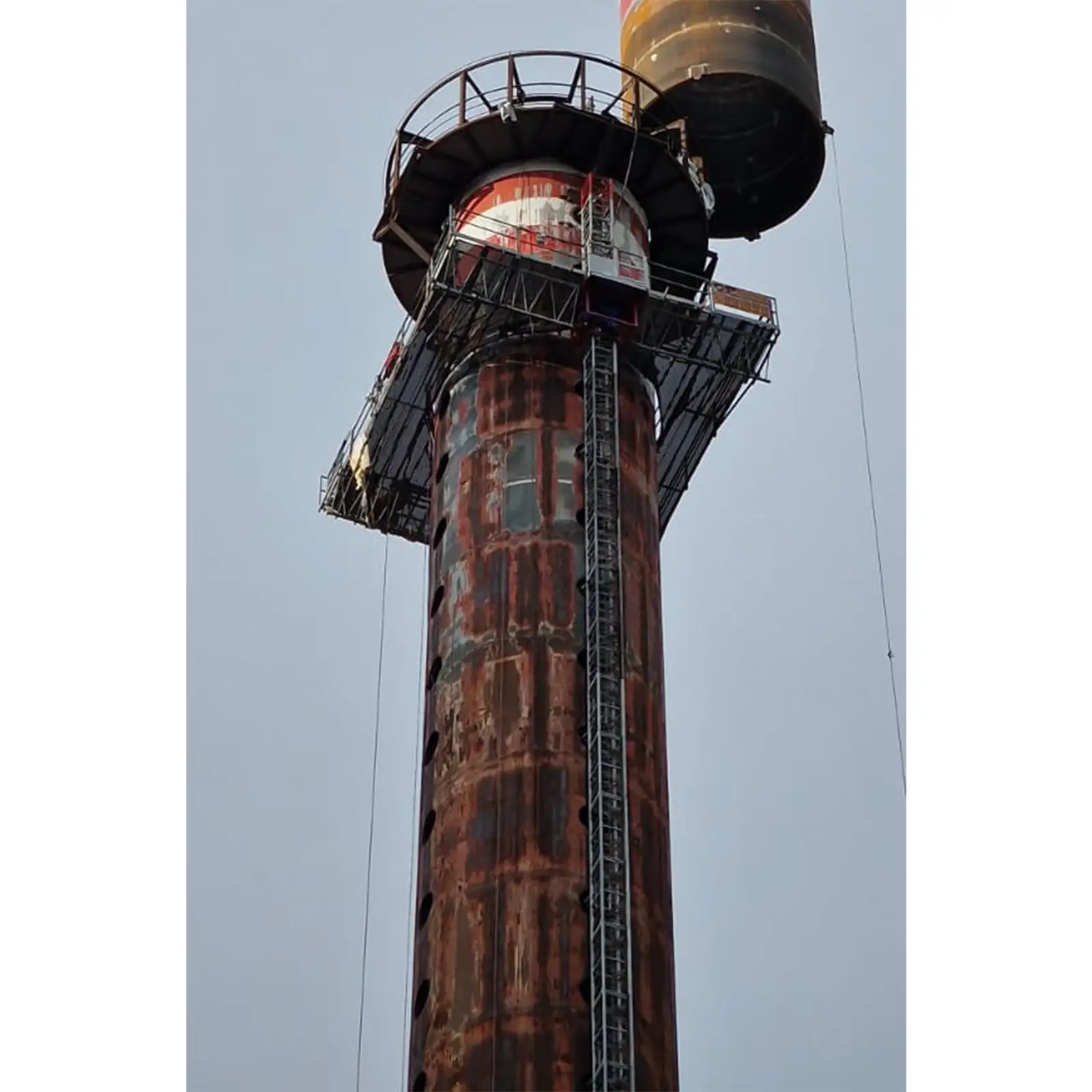
Our mobile façade platforms are available in three types—Light, Medium, and Heavy—with different widths and load capacities depending on the mast type. They operate by ascending along rack gears fixed to the mast, driven by one or more motors with electromagnetic brakes. The gearbox output presses against the rack via an idler gear to ensure smooth operation and extend mast lifespan.
The heavy-duty model is designed to operate on building façades with up to 4,000 kg capacity in dual-mast setups and 1,500 kg in single-mast configurations.
The light model, using a 20×20 box mast, can extend to 5.5 meters in single-mast and up to 18 meters in dual-mast installations, carrying 500 to 1,000 kg with balanced load distribution.

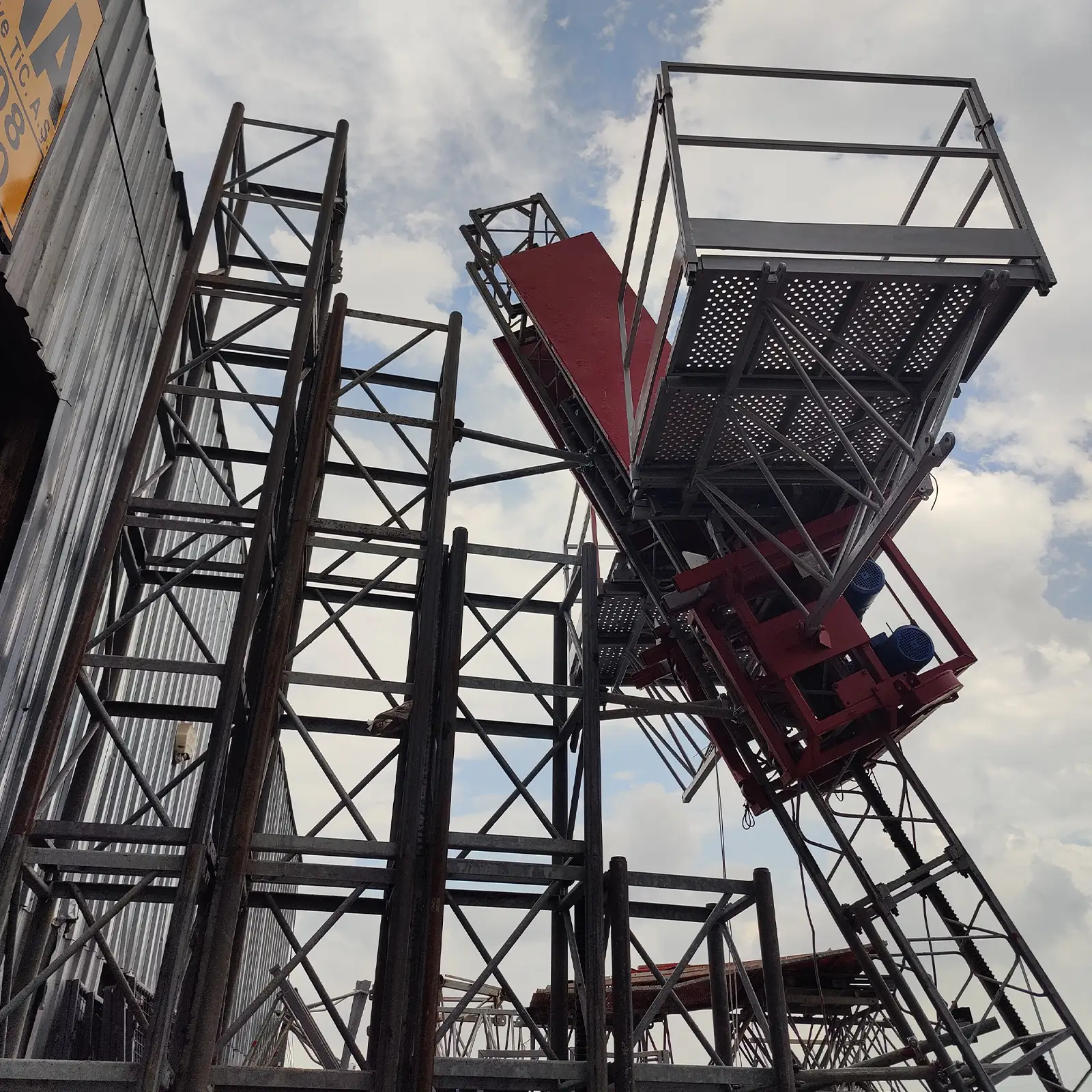
Heavy-duty versions include two 2.2 kW motors with centrifugal brakes, electromagnetic brakes, and gearboxes. In emergency situations, the centrifugal brake activates automatically. The other two models are equipped with 1×3 kW and 1×1.5 kW gear motors.
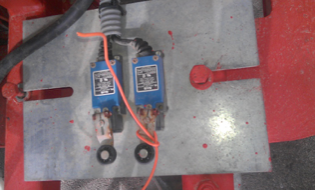
Safety and control are provided via upper and lower limit switches, phase and motor protection through thermal relays, and mast detection using inductive sensors. A red-painted final mast segment without rack teeth offers mechanical safety.
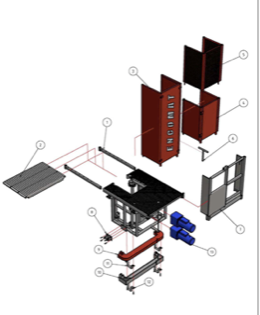
In case of a power failure, the motor brake can be released manually to lower the platform. Our single-mast platforms also include a parachute brake in addition to the centrifugal system.
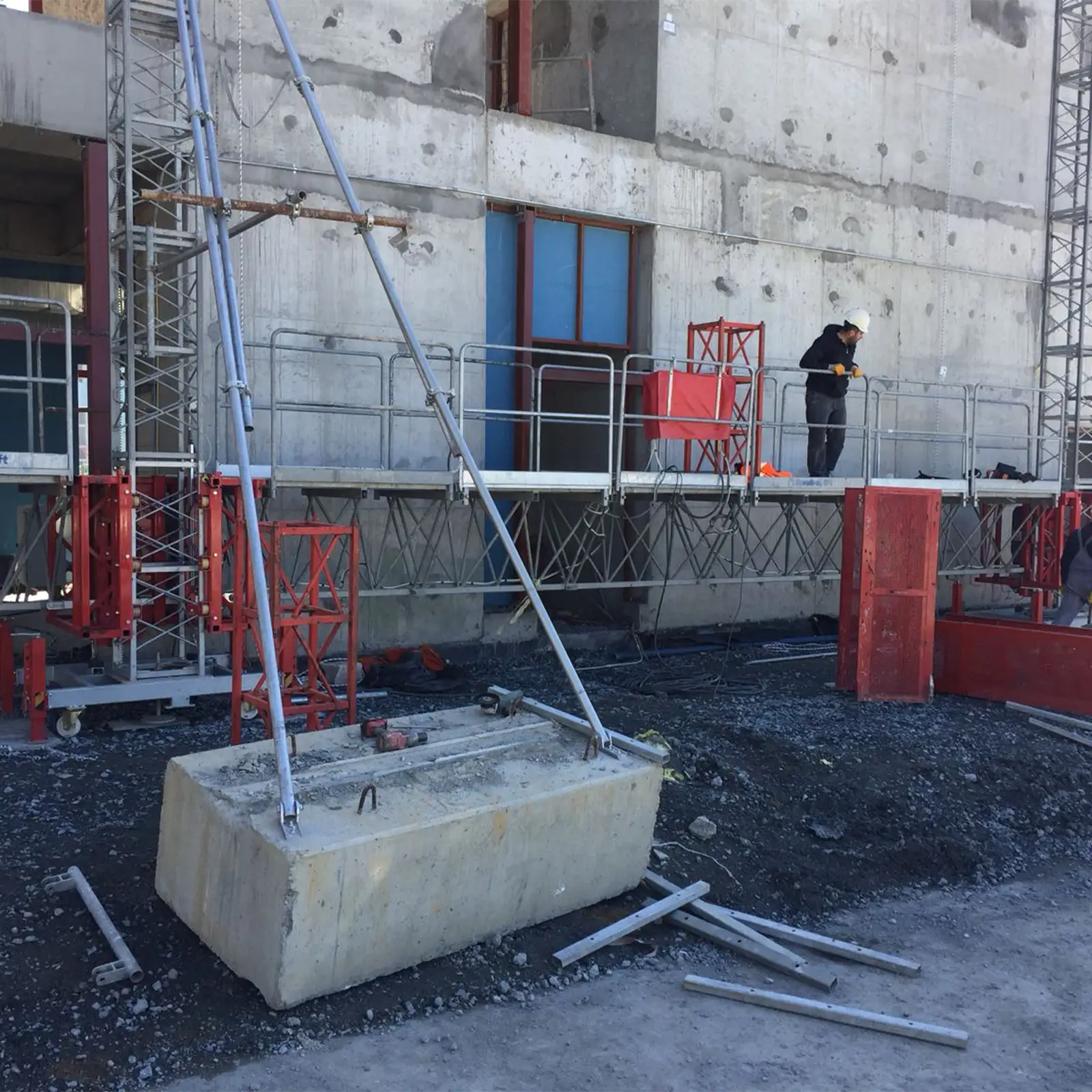
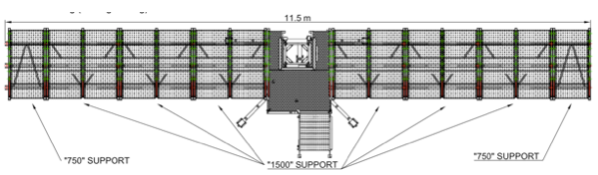
Triangular wings, bolted on both sides of the motor units, allow for horizontal outreach of up to 10 meters in single-mast and 30 meters in dual-mast configurations (extendable to 11.5 and 35 meters with reinforced short wings).
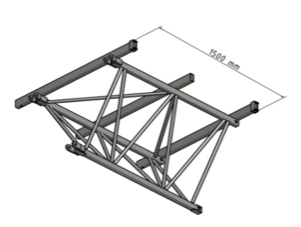
The modular wing structure allows adjustment beyond the standard 1500 mm width, with additional wing options of 750 mm and 300 mm, enabling various platform widths.
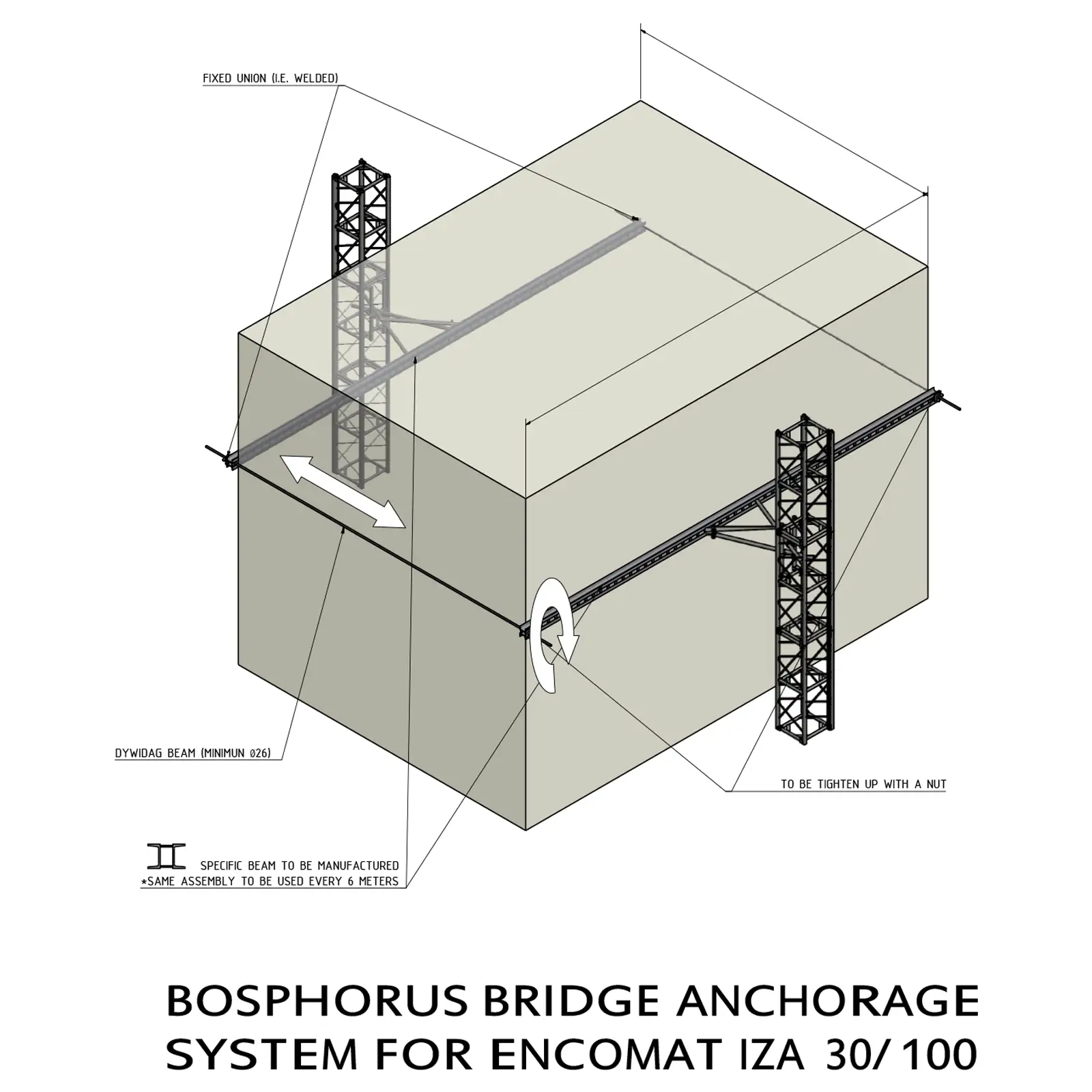
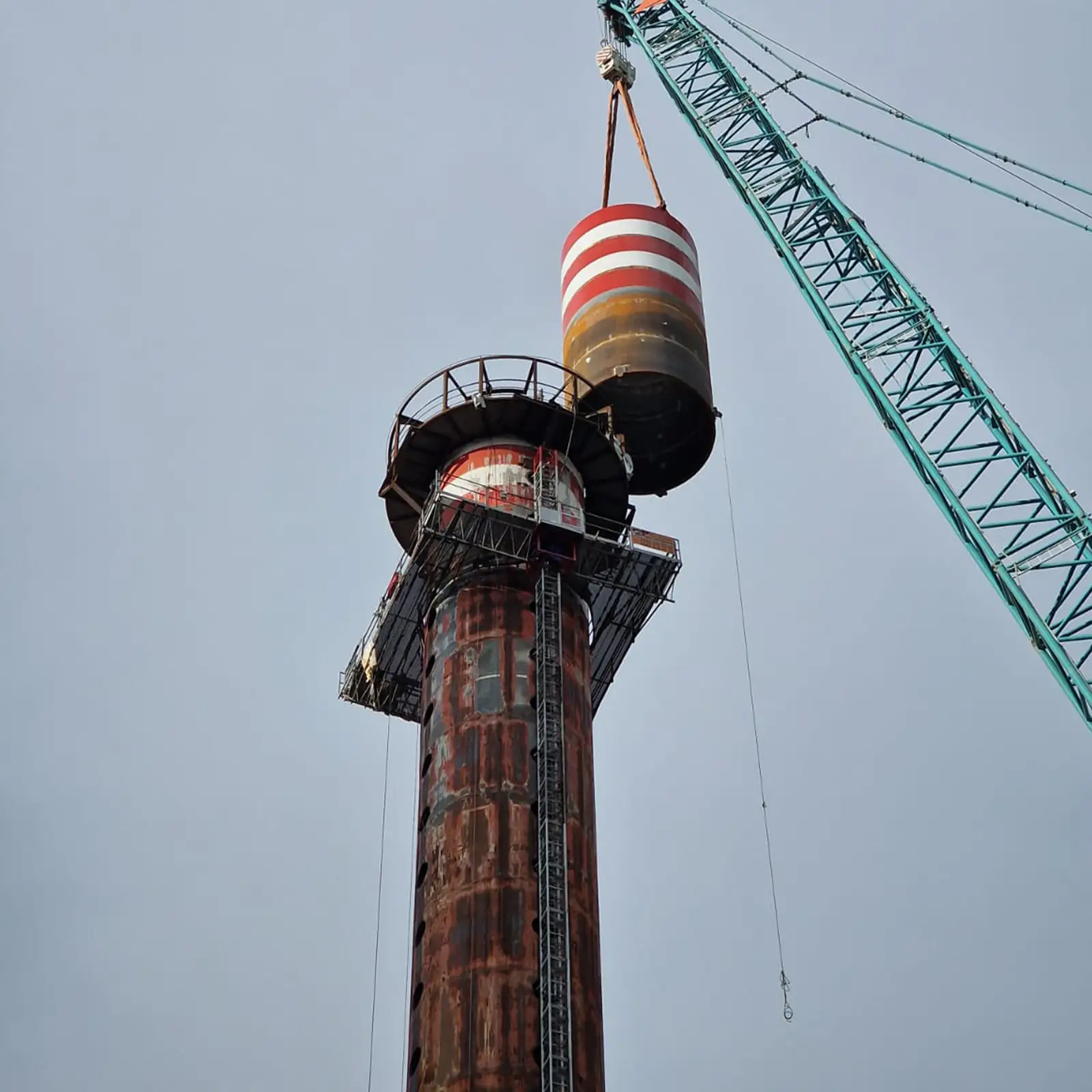
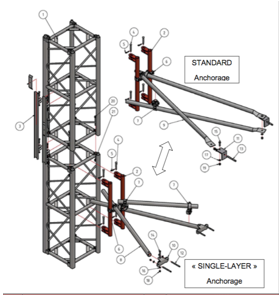
Anchoring to the wall is done every 6 meters for single-mast and every 9 meters for dual-mast setups. Platforms can reach up to 150 meters with standard masts and 200 meters with reinforced masts, at a speed of 7 meters per minute.
Platform surfaces and extensions are made from 135 mm wide, anti-slip perforated sheet metal, and are hot-dip galvanized for long-term corrosion resistance.
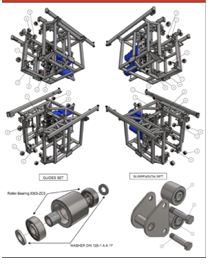
Guidance system: The motor unit is attached to the chassis on all four sides, ensuring 20 contact points between the motor and mast. Guide wheels are roller-bearing supported and made of steel.
Motor units are designed for 25,000 hours of operation without maintenance.
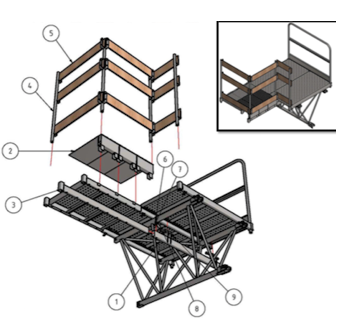
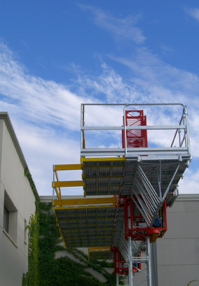
Extension arms, mounted on various profile lengths, allow the platform to reach recessed or protruding sections of building façades. For longer spans, under-supporting structures are used. In all cases, per safety standards, only personnel are permitted on the extensions — no materials or loads are allowed.
Extension profiles are drilled at intervals for pin fastening, and the holes are reinforced with welded sleeves for extra strength. The extension platform surfaces are modular and can be adjusted forward or backward when needed.

Platforms can be controlled from a single panel up to 10 meters in a single engine group and up to 30 meters in a dual setup.
A 30-meter platform can also operate as 2 10-meter panels with 2 separate panels.
When one engine group is up or down due to the different operation of the engines, the switch stops the operation of the other engine until they reach the same level.


Copy@2024 Adım Adım Dijital